
Rosemary Leave-In Hair Conditioner saved my frazzled ends after one too many heat styling experiments. If your hair tangles at the mere thought of wind, or you’re growing it out but keep losing length to breakage, come sit with me. This is a simple, kitchen-friendly recipe you can whip up without fancy tools. It’s light, it’s fresh, and it actually helps your hair feel stronger over time. I’ll walk you through what it is, why rosemary shines, and exactly how to make and use it. By the end, you’ll feel like your own hair care formulator, minus the stress.
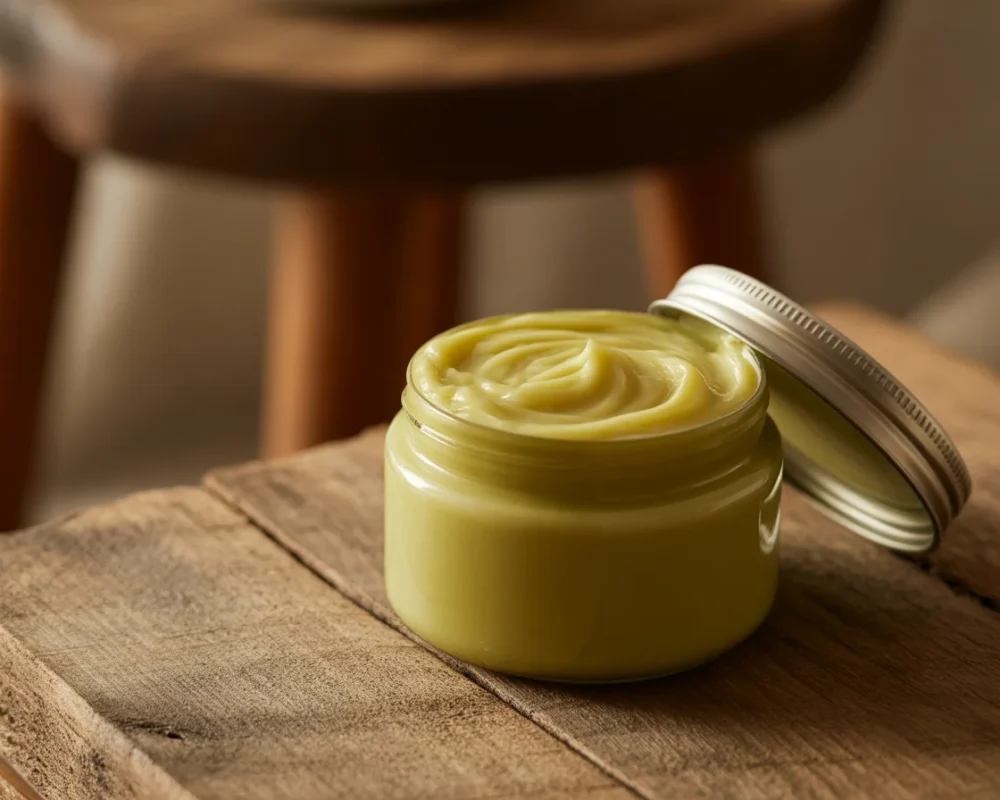
Table of Contents
What Is a Rosemary Leave-In Hair Conditioner?
Think of a leave-in like your hair’s daily moisturizer. You don’t rinse it out, so it keeps working while you go about your day. A Rosemary Leave-In Hair Conditioner delivers hydration, slip for detangling, and a soft shield against dryness and friction. It’s different from a rinse-out conditioner because it’s lighter and designed to live in your hair, not just be a quick pit stop in the shower.
How it differs from rinse-out products
Rinse-out conditioners are rich and meant to coat, then wash away. A leave-in is usually water-based with a gentle, lightweight emulsifier. It gives hair softness and smoothness without that heavy, slippery feel. This recipe uses BTMS-50, which is famous for its no-grease slip and ability to calm frizz. If you’ve ever wondered how to get that soft, touchable hair that still has some bounce, this is how.
Tip from my shower shelf: I still use a quick rinse-out conditioner after shampoo, then apply the leave-in to towel-dried hair. The combo works magic.
Why Rosemary Is Effective for Hair Growth
Rosemary is like that friend who gives tough love. It wakes up the scalp, helps improve circulation, and brings a fresh, herbal energy that makes your hair feel more alive. While it’s not a miracle cure, consistent use can support a healthier scalp environment, which often means less breakage and better length retention over time. If you enjoy combining botanical ingredients for growth-focused care, this castor oil leave-in hair conditioner is another great option, especially for sealing moisture and protecting fragile ends.
What I like most is the feel. It’s invigorating without being harsh. My scalp tends to get moody, and rosemary helps keep it balanced while my ends get the moisture they beg for. If you’re chasing growth, you want to protect the hair you already have so it doesn’t snap off. Rosemary plays nicely with that plan.
Benefits of a Rosemary Leave-In Conditioner
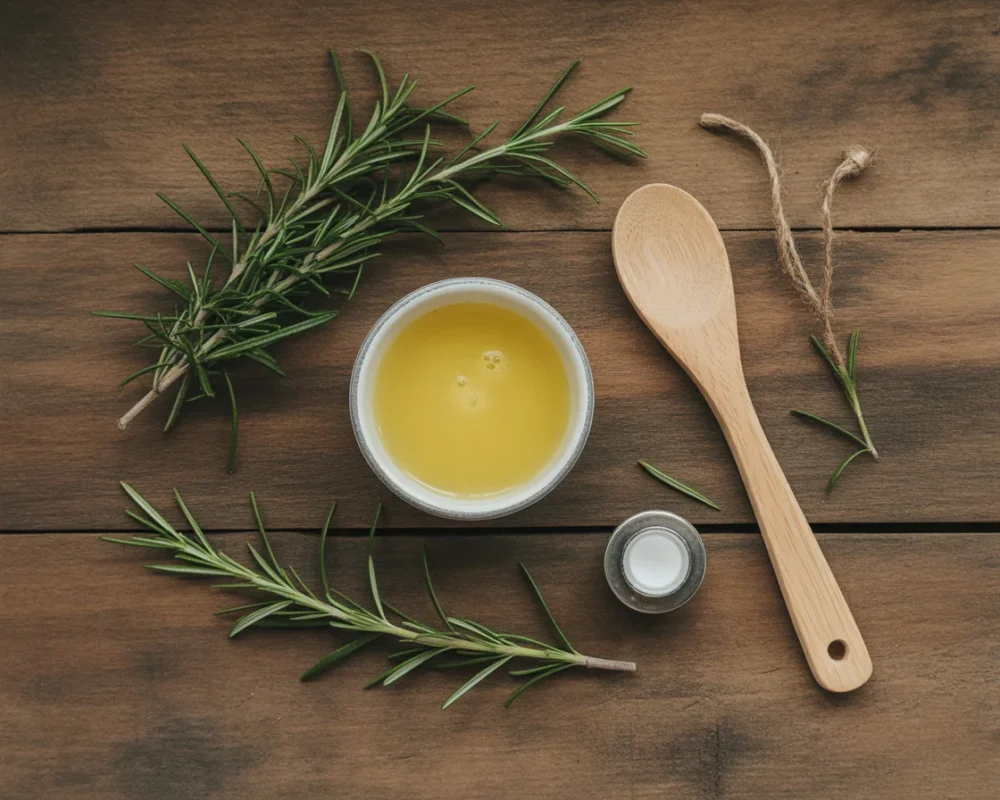
Let’s keep it real. We want softness, easy detangling, and less hair on the brush. With this leave-in, you get lightweight hydration that doesn’t sit heavy on your strands. It tames frizz without dulling your shine. I notice fewer knots at the nape of my neck and less snagging when I run my fingers through my hair, which is huge for keeping length.
There’s also an instant perk: the fresh herbal scent. Not perfume-y. Just clean, green, and soothing. On humid days, a small top-up keeps my ends from puffing out. On dry days, it keeps the crunch away. If you heat style, it adds a nice layer of slip so your hair doesn’t feel stripped after styling.
What Makes This Leave-In Conditioner Non-Greasy
The secret is balance. This formula relies on water, aloe, and BTMS-50 to deliver conditioning without heaviness, while only a small amount of lightweight oil adds softness and shine. Glycerin and panthenol draw in moisture without leaving residue, and rosemary hydrosol refreshes the scalp without weighing down the roots. If your hair tends to get weighed down easily, this non-greasy mango butter leave-in hair conditioner is another lightweight alternative that focuses on softness and smoothness without buildup.
If you’ve tried DIY creams that felt heavy, this one will feel different. It’s a soft milk, not a thick butter. It sinks in and doesn’t leave residue on your hands or your pillowcase. That’s the feel we’re after.
Key Ingredients and Their Hair Benefits
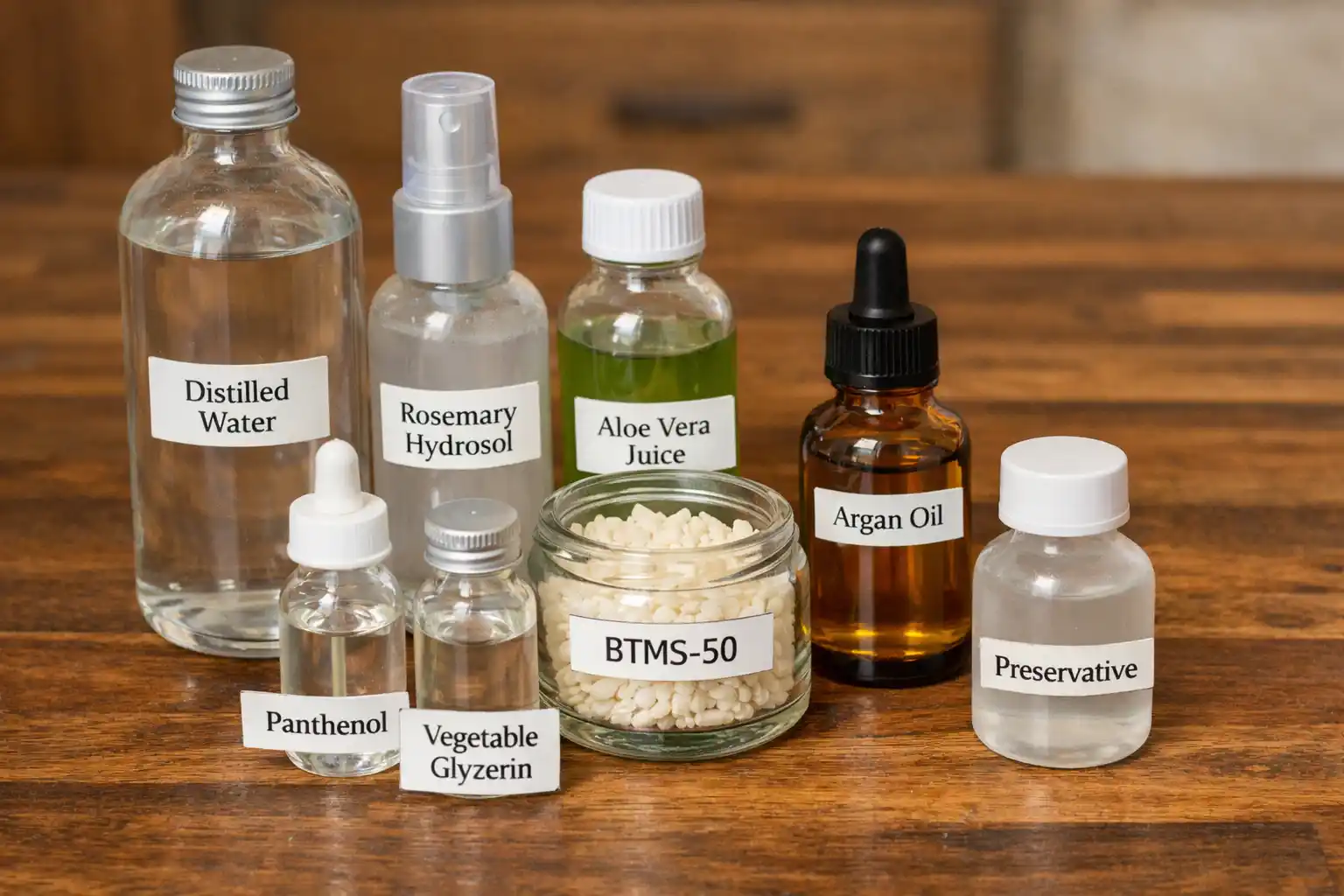
BTMS-50: A fabulous conditioning emulsifier that creates slip and softness while staying lightweight.
Aloe vera juice: Gentle hydration that calms the scalp and helps smooth the hair cuticle.
Rosemary hydrosol or tea: Adds that signature herbal refresh and supports a balanced scalp.
Panthenol (pro-vitamin B5): Strengthens the feel of hair and boosts shine.
Glycerin: A humectant that attracts moisture, helping hair feel plump and elastic.
Lightweight oil or ester: Think argan, grapeseed, or a light natural ester for a touch of gloss.
Preservative: Essential for water-based products so your conditioner stays safe and fresh.
Why BTMS-50 Is Essential in Leave-In Conditioners
BTMS-50 is the backbone here. It’s cationic, which means it clings to hair strands just enough to smooth them out. That’s why you get slip without greasiness. It detangles, reduces static, and helps your hair look polished. It also emulsifies, so your water and oils blend into a silky, stable lotion. In short, one powerhouse ingredient that makes the formula behave.
If you’ve struggled with DIY conditioners separating or feeling waxy, BTMS-50 fixes both problems. It helps the conditioner glide on smoothly, and then it quietly keeps your hair happy for hours after.
Ingredients You’ll Need to Make This Leave-In Conditioner
- Distilled water: 120 g
- Rosemary hydrosol or strong rosemary tea, cooled and strained: 60 g
- Aloe vera juice: 30 g
- BTMS-50: 6 g
- Lightweight oil or ester (argan, grapeseed, or Coco-Caprylate): 5 g
- Panthenol (powder or liquid): 2 g
- Vegetable glycerin: 3 g
- Preservative (per manufacturer rate, often 0.8 to 1 g): follow label
- Optional: a few drops of rosemary essential oil for scent, if your scalp tolerates it
Note: Always use a broad-spectrum preservative in water-based products. No skipping here. Store in a clean pump bottle and label it with the date.
How to Make Rosemary Leave-In Hair Conditioner (Step-by-Step)
- Heat the water phase. Add distilled water, rosemary hydrosol or tea, and aloe to a heat-safe beaker or bowl. Warm in a hot water bath until around hot bath temperature.
- Melt the BTMS-50. In another small vessel, warm BTMS-50 with your lightweight oil until fully melted and clear.
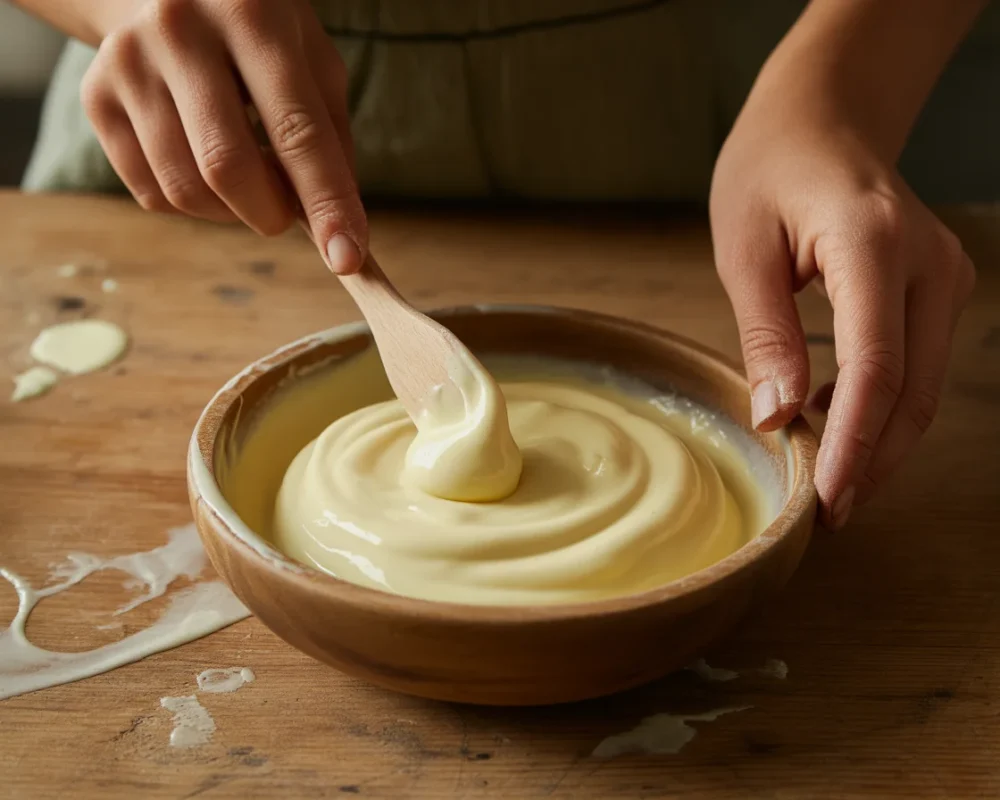
- Combine phases. Pour the melted BTMS-50 and oil into the warm water phase. Stick blend or whisk until the mixture looks milky and uniform.
- Cool and add goodies. Let the mixture cool until it’s comfortably warm. Then add glycerin, panthenol, and your preservative. Stir well.
- Optional scent. If using rosemary essential oil, add just a few drops and mix. Go light to avoid scalp irritation.
- Bottle it. Transfer to a clean, dry pump bottle. Let it fully cool before capping tight.
How to Apply Leave-In Conditioner for Best Results
Start with damp, towel-dried hair. Pump a small amount into your palms, about a nickel to quarter size for medium hair. Rub hands together, then glide through mid-lengths to ends. I sweep whatever’s left on my hands gently over the top layer to manage frizz, but I avoid the roots.
Comb through with a wide-tooth comb to distribute. Air dry or style as usual. If my ends feel dry the next day, I use a pea-sized amount to refresh.
Use this technique and your Rosemary Leave-In Hair Conditioner will melt into the hair without buildup.
I’ve tried every salon leave-in on the shelf, and this one shocked me. My curls stayed soft for three days, with less breakage on wash day. The scent is clean and comforting, not overpowering. I’m a convert.
How Often Should You Use a Leave-In Conditioner?
Use it every wash day, and lightly on non-wash days if your ends feel crunchy. For fine hair, start small and build up. For thicker or curly hair, you’ll likely enjoy a more generous amount. The key is to watch how your hair responds and adjust the dose.
Is This Conditioner Right for Your Hair Type?
Short answer: yes, with tweaks. For fine or oily hair, use a little and skip the roots. For wavy or curly hair, be generous through the mid-lengths and let those spirals drink it up. For coily hair, layering over a hydrating mist can help the product glide even better. If your hair is damaged from color or heat, this will help you detangle without the daily snap and snag that steals your length.
How Long Does Homemade Leave-In Conditioner Last?
With a proper preservative and clean tools, expect about 8 to 12 weeks stored in a cool, dry place. Keep your bottle away from steamy showers when you can. If it changes smell, color, or texture, play it safe and make a fresh batch. A small batch keeps everything feeling fresh and lush.
Can You Customize This Rosemary Leave-In Conditioner?
Absolutely. If you want extra slip, add a touch more BTMS-50 next time, maybe bump it by 1 gram. If your hair likes richer feel, add 1 to 2 grams more of a light oil. For more humectant power, a small increase in glycerin can help, but avoid going high in very humid or very dry climates to prevent frizz or moisture loss. Sensitive scalp? Skip essential oil and rely on hydrosol only.
You can also swap in cucumber hydrosol or chamomile tea for soothing vibes, but keep rosemary in some form to support that growth-friendly scalp environment. That’s the heart of this blend.
Frequently Asked Questions
Q: Can I use this on dry hair?
A: Yes, lightly. Warm a tiny amount between your hands and smooth over ends to refresh. Damp hair absorbs it better, though.
Q: Will this help with breakage?
A: It helps reduce friction and tangles, which means less breakage from brushing. Pair it with gentle detangling and fewer high-heat days for best results.
Q: Is BTMS-50 safe for my hair?
A: It’s widely used in hair care and known for its conditioning power. Always patch test if your scalp is sensitive.
Q: Can I skip the preservative?
A: No. This is water-based and needs a preservative for safety. If you want preservative-free, make a tiny batch and refrigerate for a very short time, but I don’t recommend it.
Q: Can I use this with protein treatments?
A: Yes. This is moisture focused. If your hair loves protein, work in protein masks or sprays on separate days and keep this for daily softness.
Final Thoughts: Stronger, Healthier Hair with Rosemary
With a little prep and a few key ingredients, you can make a Rosemary Leave-In Hair Conditioner that gives real results. You’ll see less breakage, easier detangling, and that soft, touchable finish we all want. Prefer to try a ready-made option before DIY? I’ve had friends love the Mielle Organics Rosemary Mint Strengthening Leave In Conditioner for similar lightweight moisture. Whether you mix your own or buy a bottle, stick with it for a few weeks and watch your hair calm down and perk up. Can’t wait to hear how it goes for you in the comments.
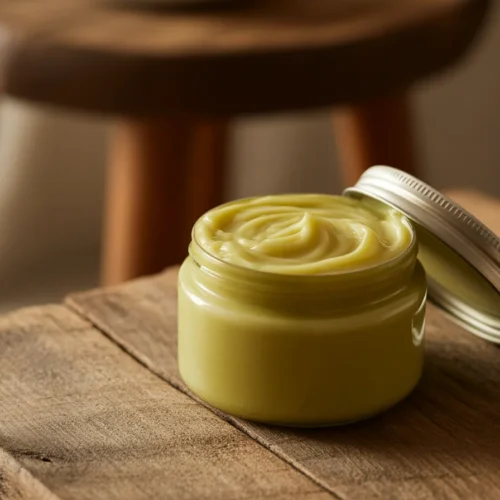
Rosemary Leave-In Hair Conditioner
Materials
Water Phase
- 120 g Distilled water
- 60 g Rosemary hydrosol or strong rosemary tea, cooled and strained
- 30 g Aloe vera juice
Emulsifier and Conditioning Phase
- 6 g BTMS-50 Essential for conditioning without greasiness.
- 5 g Lightweight oil or ester (argan, grapeseed, or Coco-Caprylate)
Additives
- 2 g Panthenol (powder or liquid) Pro-vitamin B5 for hair strengthening.
- 3 g Vegetable glycerin Humectant that attracts moisture.
- 0.8-1 g Preservative (per manufacturer rate) Essential for water-based products.
- a few drops Rosemary essential oil (optional) Add for scent if tolerated by the scalp.
Instructions
Preparation
- Heat the water phase: In a heat-safe beaker, combine distilled water, rosemary hydrosol or tea, and aloe. Warm in a hot water bath until around hot bath temperature.
- Melt the BTMS-50: In another small vessel, warm BTMS-50 with a lightweight oil until fully melted and clear.
- Combine phases: Pour the melted BTMS-50 and oil into the warm water phase. Use a stick blender or whisk until the mixture looks milky and uniform.
- Cool and add goodies: Let the mixture cool until it’s comfortably warm, then add glycerin, panthenol, and your preservative. Stir well.
- Optional scent: If using rosemary essential oil, add just a few drops and mix lightly.
- Bottle it: Transfer the mixture to a clean, dry pump bottle and let it cool fully before capping tight.