
overnight coconut oil hair mask nights are basically my little reset button when my hair starts feeling like dry straw from heat styling, windy walks, or just life. If you have ever woken up, looked in the mirror, and thought, why do my ends look crunchy, you are in the right place. I started doing this at-home mask when I wanted something simple, cheap, and actually doable on a regular weeknight. No fancy tools, no complicated steps, and you can still watch your show while it soaks in. I will walk you through exactly how I do it, what to expect, and the little tweaks that make it work better.
Table of Contents
Coconut Oil Hair Benefits
Coconut oil is one of those pantry staples that somehow crosses over into beauty like it has always belonged there. The big reason people love it is that it helps hair feel softer and look smoother, especially on the ends where dryness shows up first. It is also great for reducing that frizzy halo look that pops up when the air is humid or your hair is naturally thirsty.
Here is what I personally notice when I keep it in my routine for a few weeks:
- Softer ends that do not snag as much when I brush
- More shine, in a healthy way, not a greasy way
- Less frizz around my crown and hairline
- Better slip when detangling, so I break fewer strands
It also helps protect the hair by coating it a bit, which can make it feel stronger during styling. Just a quick real talk note: coconut oil is not magic glue for split ends. Nothing truly “repairs” a split end except a trim, but it can make ends look and feel nicer so your hair is easier to manage.
If you like nerdy details, coconut oil is rich in fatty acids like lauric acid, which many people say helps it “play nice” with hair. But you do not need a science degree to enjoy the results. If it makes your hair feel good and you can wash it out comfortably, it is a win.
How to Apply a Coconut Oil Hair Mask
This is the part everyone overcomplicates, so I am going to keep it super plain. The goal is to coat your hair, especially the mid lengths and ends, without drowning your scalp in oil unless your scalp truly loves it.
What you will need
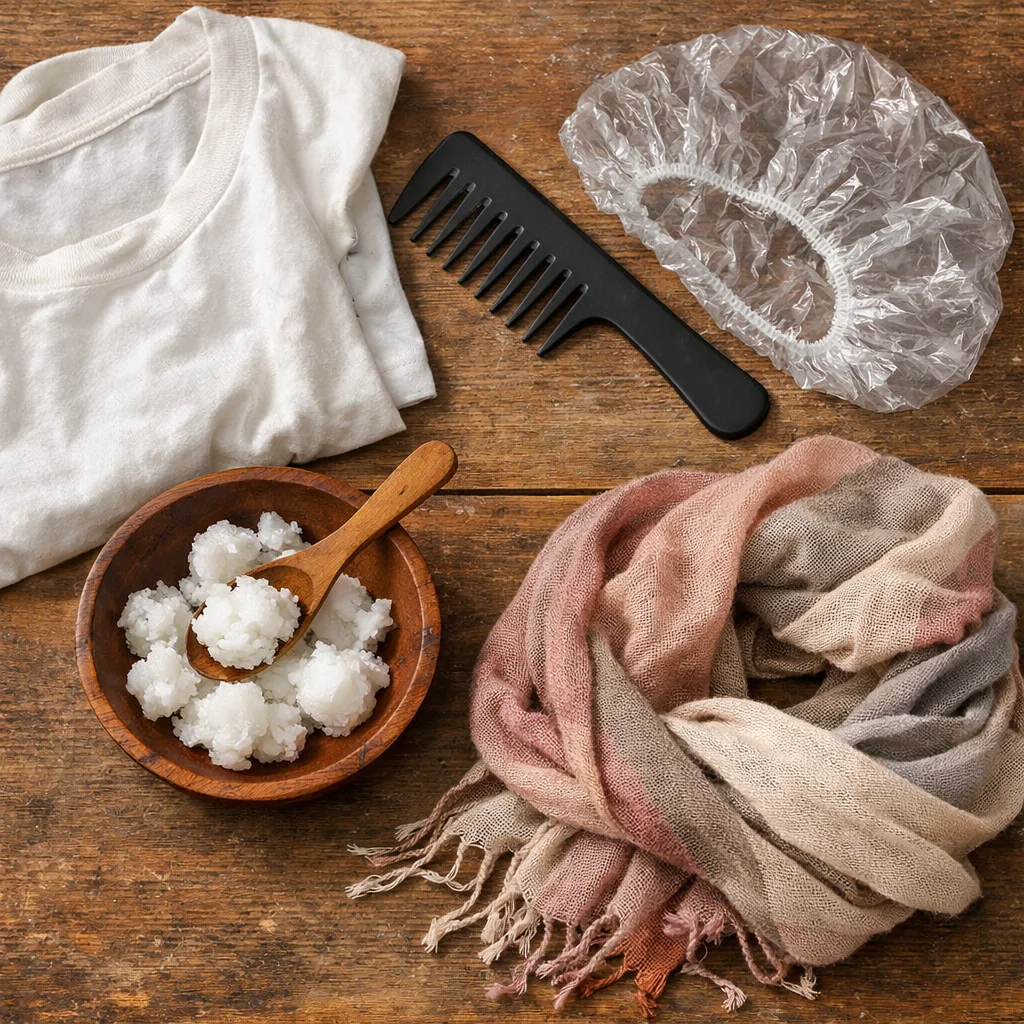
- 1 to 2 tablespoons virgin coconut oil (more for very thick or long hair)
- An old T-shirt or towel you do not care about
- A wide-tooth comb or your fingers
- A shower cap, scarf, or a bun you can secure gently
My step by step method
1) Start with dry hair. I know some people prefer damp hair, but dry hair helps me use less oil and avoid that heavy feeling.
2) Warm the coconut oil between your palms or melt it for a few seconds. It should be liquid, not hot. If it is too warm, wait a minute.
3) Apply from the mid lengths down first. I rub it in like I am buttering toast, focusing on the driest pieces. Then I use whatever is left on my hands for the top layer and around the face framing bits.
4) Detangle gently. I finger comb first, then use a wide-tooth comb if needed. This spreads the oil evenly and helps avoid clumps.
5) Put it up and protect your pillow. I twist into a loose bun and use a shower cap or wrap with a soft scarf. Old T-shirt on the pillow is my backup plan because I am not brave.
6) Sleep, then wash it out in the morning. I usually shampoo twice and condition once. If your hair is fine, you might only need a small amount of conditioner on the ends.
While you are in your natural hair care era, you might enjoy poking around this hub of ideas too: natural hair care. I love having a bunch of simple options depending on what my hair is doing that week.
“I tried this overnight method twice in one week after a beach trip and my hair felt like itself again. It was way less frizzy and my ends stopped tangling so much.”
;
Best Practices for Using Coconut Oil on Hair
Okay, this is where the little details matter. Coconut oil can be amazing, but only if you use the right amount and you are realistic about your hair type. My best results come from doing this as a steady habit, not a one-time rescue mission.
How often should you do it
For most people, once a week or once every two weeks is plenty. If your hair is super dry or curly, you might like weekly. If your hair is fine or gets oily fast, start with every other week and keep the amount small. You can always add more next time, but it is annoying to wash out too much.
My favorite tricks that make the overnight coconut oil hair mask method feel easy and not messy:
Use less than you think. You can always touch up your ends with a tiny dab, but you cannot undo over-oiling without another shampoo.
Keep it mostly off your scalp if your scalp gets greasy or itchy easily.
Pre-shampoo option. If your hair clings to oil, coat hair with a bit of conditioner before shampooing. It helps the oil slide out.
Pick the right coconut oil. I prefer virgin, unrefined coconut oil because it smells lightly coconutty and feels clean.
Also, if your hair craves richer treatments, you can rotate this with other oils. For example, I have also tried this leave-in idea when I want softness without an overnight soak: castor oil leave-in hair conditioner. Different vibe, but it is nice to have options.
Common Mistakes to Avoid with Coconut Oil Hair Treatments
I learned these the hard way, usually on a morning when I had somewhere to be and my hair looked like I dipped it in a fryer. Save yourself the drama.
Using way too much oil
This is the number one mistake. More oil does not equal more softness. It often equals more shampooing and a heavy, flat look.
Applying only to the top of your head
Your ends are usually the neediest part, so do not waste the good stuff only on the roots. Unless your scalp is very dry, prioritize the mid lengths and ends.
Skipping a proper wash out
If your hair feels coated after, it probably needs a second shampoo. Make sure you massage your scalp and rinse longer than you think.
Going to bed with dripping oil
Let it soak in for a few minutes, then wrap it. If it is dripping, you used too much or you applied it too warm.
Expecting instant miracles
You will likely feel a difference after one try, but the real payoff happens when you do it consistently and pair it with gentle hair habits.
And one more thing: if coconut oil makes your hair feel stiff or weirdly dry, you are not imagining it. Some hair types just do not love it. If that happens, try using less, leaving it on for a shorter time, or switching to another oil that feels better for you.
Additional Tips for Healthy Hair
The mask helps a lot, but healthy hair is also about the boring everyday stuff. I say that with love because I am the queen of forgetting my heat protectant, so I get it.
Here are a few habits that make the biggest difference alongside an overnight coconut oil hair mask routine:
- Trim your ends every so often so splits do not travel up
- Use a gentle shampoo and focus it on the scalp, not the ends
- Condition consistently, especially if you color or heat style
- Sleep on a smoother surface like a satin pillowcase if frizz is your enemy
- Go easy on tight hairstyles that pull at the hairline
Food blogger confession: I notice my hair is happier when I am actually hydrated and eating decently. When I am living on salty snacks and coffee, my hair looks like it is protesting. A little extra water and some balanced meals go a long way.
Also, if you are sensitive or prone to scalp issues, do a quick patch test with coconut oil on your skin first. It is simple, and it can save you from an itchy situation later.
Common Questions
Can I leave coconut oil in my hair overnight every night?
I would not. Most people do better with once a week or every other week. Too often can make hair feel heavy and can be tough to wash out.
Should I apply it to wet or dry hair?
I prefer dry hair because I use less and it spreads easily. If your hair is very thick, slightly damp can help, just do not apply when it is dripping wet.
How do I wash it out without stripping my hair?
Shampoo twice, rinse well, then condition the ends. If it still feels oily, try a small amount of conditioner before shampoo as a “pre-wash” step.
Will coconut oil help with dandruff?
It might soothe dryness for some people, but dandruff can have different causes. If flakes and itching stick around, it is worth talking to a dermatologist.
What if coconut oil makes my hair feel stiff?
Use less, leave it on for a shorter time like 30 to 60 minutes, or switch oils. Hair is personal, and you are not doing anything wrong.
A cozy final note before you try it
If your hair has been begging for some TLC, the overnight coconut oil hair mask is such an easy, low-effort way to wake up to softer strands. Keep the amount small, focus on the ends, and give yourself a couple tries to find your sweet spot. I also like reading other real-life experiences, like Beauty DIY: I Put Coconut Oil on My Hair Once a Week for a Month …, because it reminds me we all tweak things to fit our own hair. If you try it, be patient and consistent, and let it become one of those simple self-care habits that actually sticks. You have got this.
Coconut Oil Hair Mask
Materials
Main Ingredients
- 1-2 tablespoons virgin coconut oil Use more for very thick or long hair.
- 1 old T-shirt or towel an old T-shirt or towel For protection while you sleep.
- 1 wide-tooth comb or fingers a wide-tooth comb or your fingers For detangling.
- 1 shower cap or scarf a shower cap, scarf, or bun to secure hair To protect your pillow.
Instructions
Application
- Start with dry hair.
- Warm the coconut oil between your palms or melt it slightly until it is liquid but not hot.
- Apply the oil from the mid-lengths down first, focusing on the driest pieces, then use any remaining oil on your hands for the upper layers.
- Gently detangle your hair using fingers first, followed by a wide-tooth comb if necessary.
- Twist your hair into a loose bun and secure it with a shower cap or a soft scarf.
- Sleep with the mask on, then wash it out in the morning using shampoo twice and condition once.